2026-02-05 • 5 min read
BOND Series: Smarter Binding for Stronger Ceramic Performance
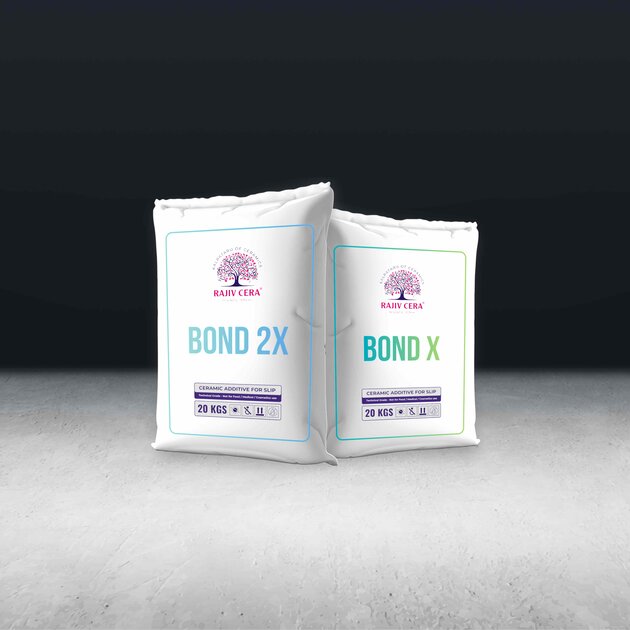
Discover how the BOND Series enhances slurry stability, reduces wet breakage, and delivers predictable results in ceramic manufacturing.
In modern ceramic manufacturing, consistency is everything. From slurry preparation to pressing and green handling, even small instabilities can lead to cracks, lamination, edge damage, and costly rejections. The BOND Series by Rajiv Cera is designed to solve exactly these challenges by strengthening the foundation of your tile body performance.
What is the BOND Series?
The BOND Series is a range of high-performance ceramic body additives developed to enhance workability, suspension stability, and green strength. Available in two advanced grades — Bond X and Bond 2X — the system reinforces and stabilizes the tile body during critical stages like slurry preparation, spray drying, and pressing.
The result is a more controlled forming response and a body that behaves predictably across batches.
Key Performance Advantages
1. Lesser Wet Breakage
During green handling and transfer, weak bonding often causes tiles to crack or chip. The BOND Series improves inter-particle binding, creating a stronger green body that withstands movement and mechanical stress.
2. Lower Dusting
Excess dust generation during powder handling not only creates operational issues but also affects health, housekeeping, and material loss. By improving cohesion, the system reduces loose particle formation and airborne dust.
3. Higher Suspension Stability
A stable slurry means fewer settling issues, consistent density, and smoother processing. The BOND Series supports uniform suspension, ensuring better spray dryer feed behavior and improved powder quality.
4. Better Binding
Strong binding improves the structural integrity of the unfired tile body. This reduces cracks, lamination, and edge defects, especially in large formats or high-pressure pressing applications.
5. Higher Plasticity
Improved plasticity leads to smoother pressing, better compaction, and enhanced surface quality. This contributes to uniform density distribution and consistent tile performance.
What Does This Mean on